
Whitney E. George
Composer and conductor; founder of The Curiosity Cabinet (MMIX). Her recent work — including The Curious Case of Dr. Jekyll & Mr. Hyde — builds theatrical rooms where chamber music, image, and object act on one another.
BILL No. XV
An immersive dialogue for horn, electronics, and moving reflections.
The Exquisite Corpse is an immersive performance and installation for horn, live electronics, and a room of moving mirrors — co-created by composers Whitney E. George and Hannah Eisendle with horn soloist Melissa Danas. The world première arrives June MMXXVII at the Austrian Cultural Forum New York.
The piece takes its name from the surrealists’ folded-paper game, in which a figure is assembled by many hands and no player sees the whole body at once. Here the game is played with sound, light, image, and architecture: sketches, intuitions, and unfinished ideas pass between the three creators until the material escapes clear authorship — filtered, translated, misread, transformed.
Something appears, then doubles, then fractures — horn, performer, composer, audience, reflection, echo. The room is alive before the music begins.
I — The Premise
Reflection is the project’s underlying principle rather than a single metaphor: mirroring, resonance, translation, critical thought, the reflection of light. Mirrors are not merely images here but physical elements of the installation — stationary and moving, over a reflective floor, with the old theatrical optics of the Pepper’s Ghost illusion. As the piece unfolds, reflections become harder and harder to tell from the things they reflect. What is original? What is transformed? What is real, and what is only a reflection?
The performance begins with projections and reflections and moves gradually toward the physical, real form of the performer — shadow, then image, then flesh, then image again. The audience does not watch from outside the frame.
“The audience is not passive. They complete the circuit. Their presence measures the work, and in measuring it, alters it.”
— Whitney E. George
The work translates fluidly between a live, non-linear concert and a standalone museum installation. As an installation it behaves like a spinning coin — looping daily, growing shorter and darker, until it fades entirely.
II — The Trio
The project rejects the notion of the single, isolated author. Two distinct compositional voices merge with a performer’s lifelong physical relationship to her instrument — and to herself. Each gesture arrives through a filter: Melissa’s body through the horn, the horn through its own extraordinary construction, Hannah’s imagination through Whitney’s, Whitney’s through theirs, the audience through the room, the room through its reflections.
Composer and conductor; founder of The Curiosity Cabinet (MMIX). Her recent work — including The Curious Case of Dr. Jekyll & Mr. Hyde — builds theatrical rooms where chamber music, image, and object act on one another.
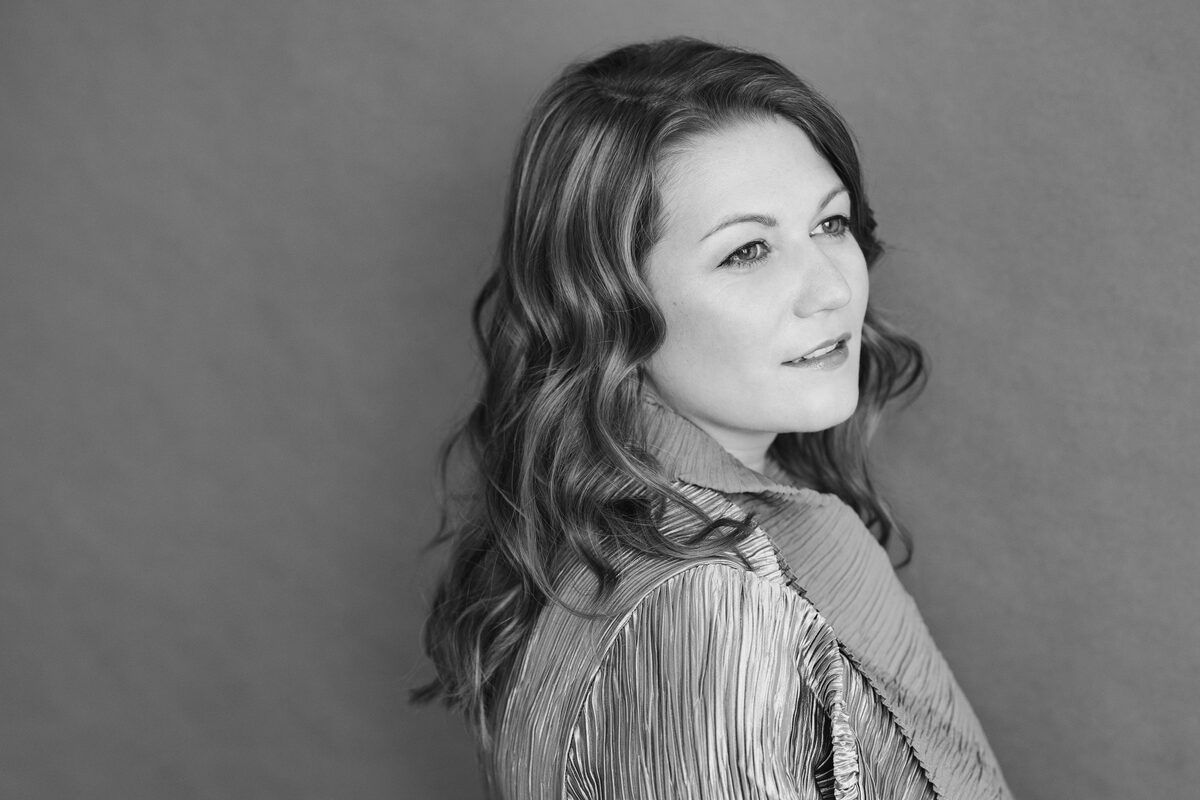
Austrian composer and conductor. Her orchestral work heliosis, premièred by Marin Alsop in 2022, has travelled across Europe and the United States, including the BBC Proms; she has conducted the ORF Vienna Radio Symphony Orchestra and the Spanish National Orchestra and Choir.
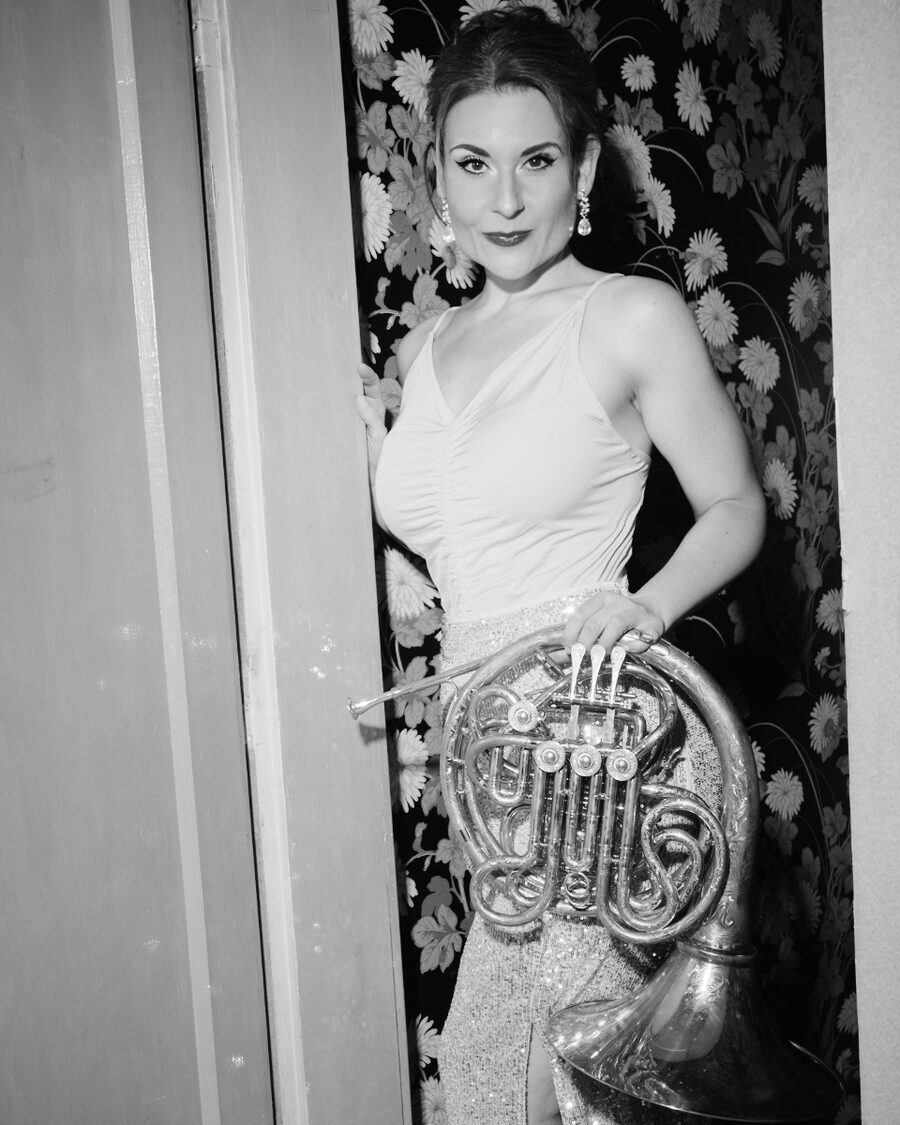
Horn soloist, performing on an instrument co-created for her with makers Klaus Fehr and Jan Štýbnar — an amalgamation of her life’s experience as an artist and a player, from the horn’s valveless origins to its modern chromatic mechanics.
“For me, this project feels like standing inside a mirror rather than in front of one. I keep imagining a room where the image arrives before the body does: a flash of brass, a breath in the dark, a handprint on glass, a shadow that has already learned the music before any of us have written it. Who is making the first sound? Who is remembering it? Who is distorting it? Who is being reflected, and who is doing the reflecting?
“I am interested in collaboration as a kind of séance and a kind of anatomy. We are assembling a body together, but none of us can see the whole body at once. The piece becomes a living chain of translation — breath into metal, metal into resonance, resonance into image, image into memory, memory into another body.
“I am especially moved by the horn as the center of this world because it already feels like an exquisite corpse: part ancient call, part machine, part animal, part reliquary. It is an instrument of distance and intimacy at once. It can summon something from far away, but it also requires the most private mechanics of the body — breath, pressure, embouchure, endurance, vulnerability.
“I want this piece to feel like a body becoming visible in fragments: a horn call from another room, a reflection moving when no one has moved, a sound that seems to remember a previous life. A work about identity, but also about the impossibility of identity remaining singular — the self as something assembled, misread, haunted, chosen, reflected, and continuously recomposed.”
“At the centre of The Exquisite Corpse lies the idea of reflection in its many meanings: reflection as mirroring, resonance, translation, critical thought, acoustic phenomenon, and the reflection of light. Throughout the project, reflections become increasingly difficult to distinguish from what they reflect. More generally, the project explores the ways in which perception is always mediated rather than immediate.
“Instead of presenting finished works, we expose sketches, intuitions, and unfinished ideas, allowing them to become the starting point for someone else’s next step. This requires trust, since we invite others into a moment of creative vulnerability. Material gradually escapes clear authorship, remaining in motion instead of becoming fixed. In this sense, self-discovery happens through someone else’s imagination.
“Jean-Paul Sartre famously described the gaze of the Other as something that limits and objectifies the self. The Exquisite Corpse proposes the opposite. Being reflected in another does not diminish possibility but expands it. Reflection is no longer a loss of autonomy but a condition for discovering unforeseen possibilities — of the work, of perception, and perhaps also of oneself.”
III — The Instrument
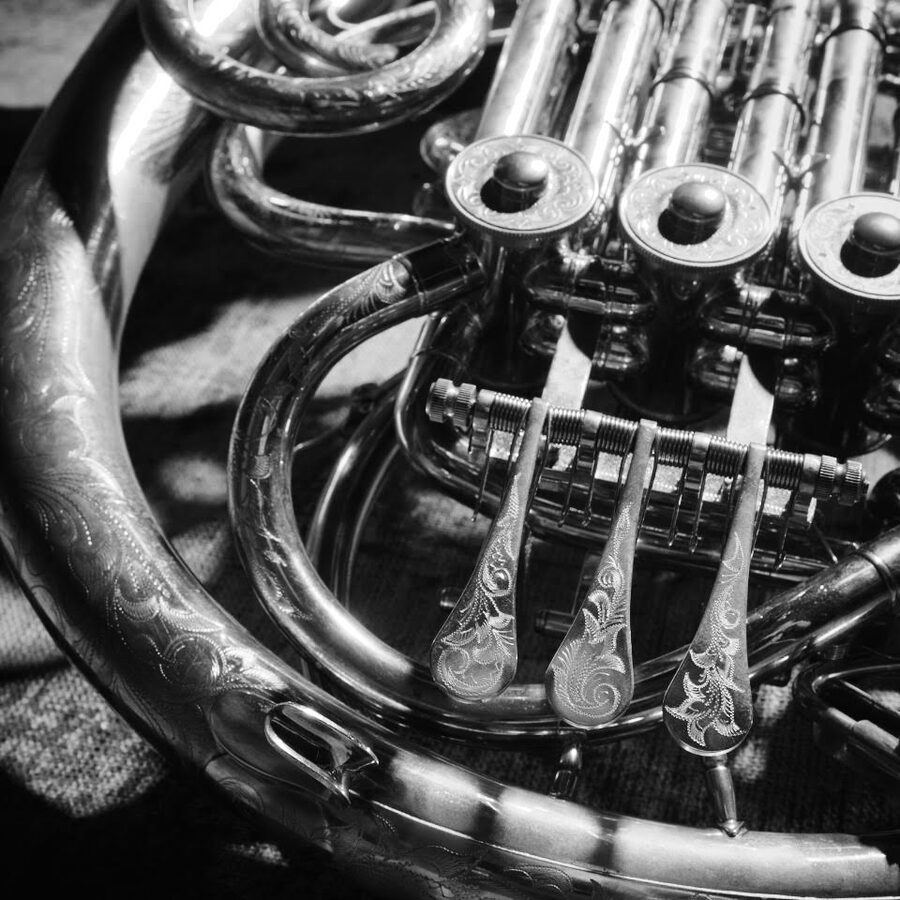
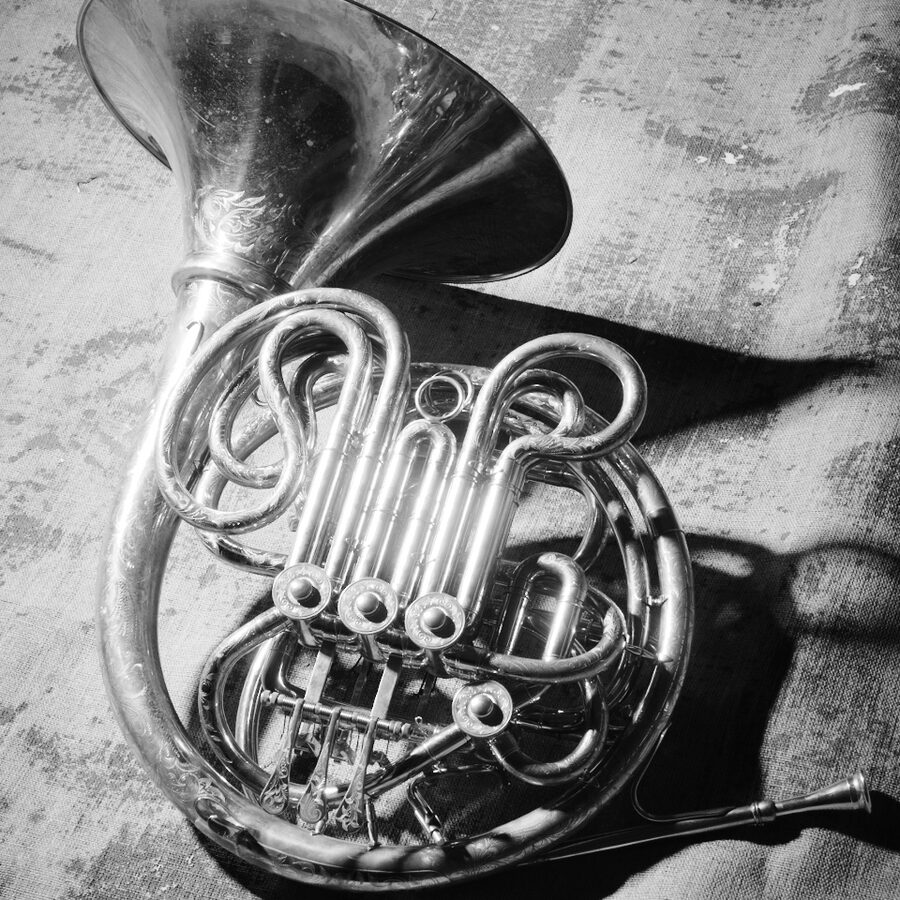
The horn already behaves like an exquisite corpse: part ancient call, part machine, part animal, part reliquary. Its history runs from the valveless natural horn and the long-distance call of the alphorn into modern chromatic mechanics — an instrument that can summon something from far away while demanding the most private mechanics of the body.
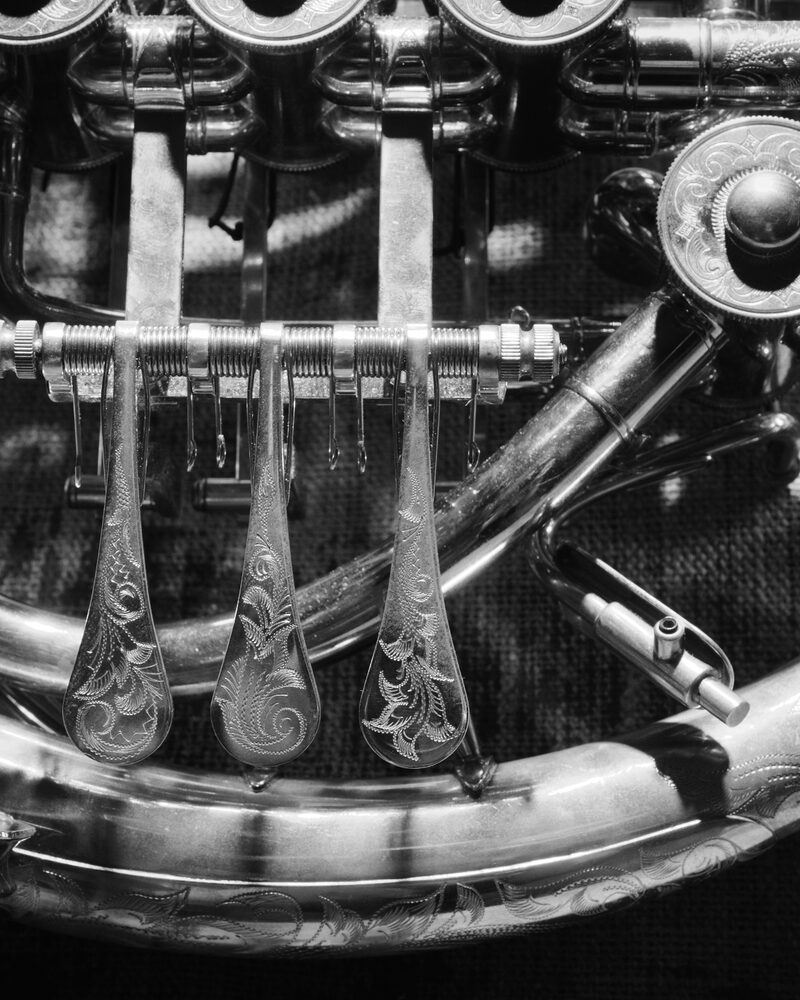
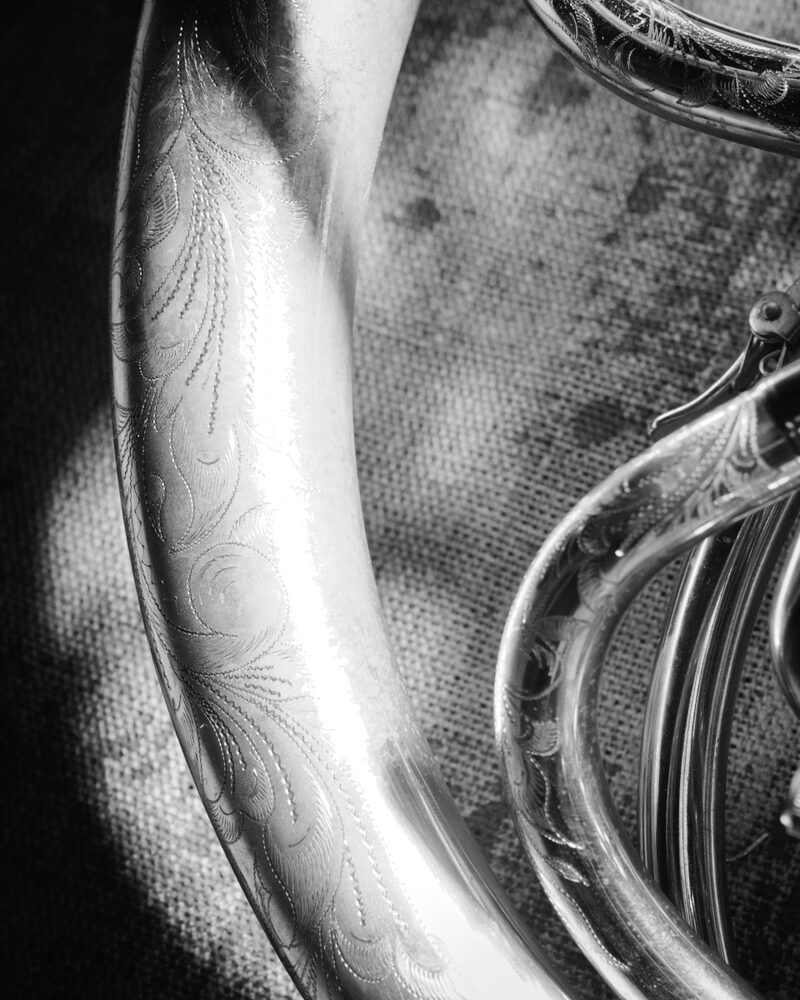
Melissa’s horn was built for her in collaboration with makers Klaus Fehr and Jan Štýbnar: a handmade accumulation of choices, shaped by experience, identity, touch, and desire. Not only an instrument but a mirror-body.
It is also the project’s central acoustic fact. The horn is played facing away from its listener: its sound arrives through reflection rather than direct projection, while its polished surface mirrors the installation around it — reflecting light as it produces sound. What appears immediate is already mediated; what seems to be an origin may already be a reflection.
IV — The Path to the Première
June · MMXXVI Recordings Initial project audio archival sessions complete
Winter · MMXXVI–VII Composition Final score and electronic drafts delivered to Melissa
Spring · MMXXVII Prototyping Graphic-score publication design; set and lighting prototypes
June · MMXXVII World première Austrian Cultural Forum, New York
The première at the Austrian Cultural Forum New York doubles as the proof-of-concept for the installation, with European exhibitions to follow.
V — Support
Support funds the room itself: the lighting and set designers, the moving-mirror mechanics, the electronic audio software, and the artists. In return, the tiers below assemble you into the body of the work — from a mailed exquisite-corpse postcard to a seat at the première.
The first sentence the surrealists’ game ever produced: “Le cadavre exquis boira le vin nouveau” — the exquisite corpse shall drink the new wine.